The asset schedule
Every component with its class, its cost and the IRS row it was matched to.
NEW100% bonus depreciation, back for property bought after January 19, 2025see your estimate
How it works
A study splits what you paid for a building into its parts, so the parts that wear out sooner are written off sooner. Here is how NoCostSeg does it, step by step, and what your tax preparer gets at the end.
Step 1 · What you bring
There is no visit to schedule and nothing to fill in by hand. Three kinds of file do the work, and only the first is required.
The one file every study needs. It gives the price you paid and the date you closed, and it is where the split between land and building starts.
A dozen phone photos of the kitchen, the floors and the yard. They show what is actually in the building, which no closing statement lists.
A floor plan gives square feet and counts. A renovation invoice gives a real cost where the study would otherwise estimate. Neither is required.
Every value it takes from a document is shown beside the place it was read from. If a value isn't on the page, it says so. Nothing goes into your study until you say yes.
Start free studyStep 2 · Find
A cost segregation study is a list of components. This is where the list comes from.
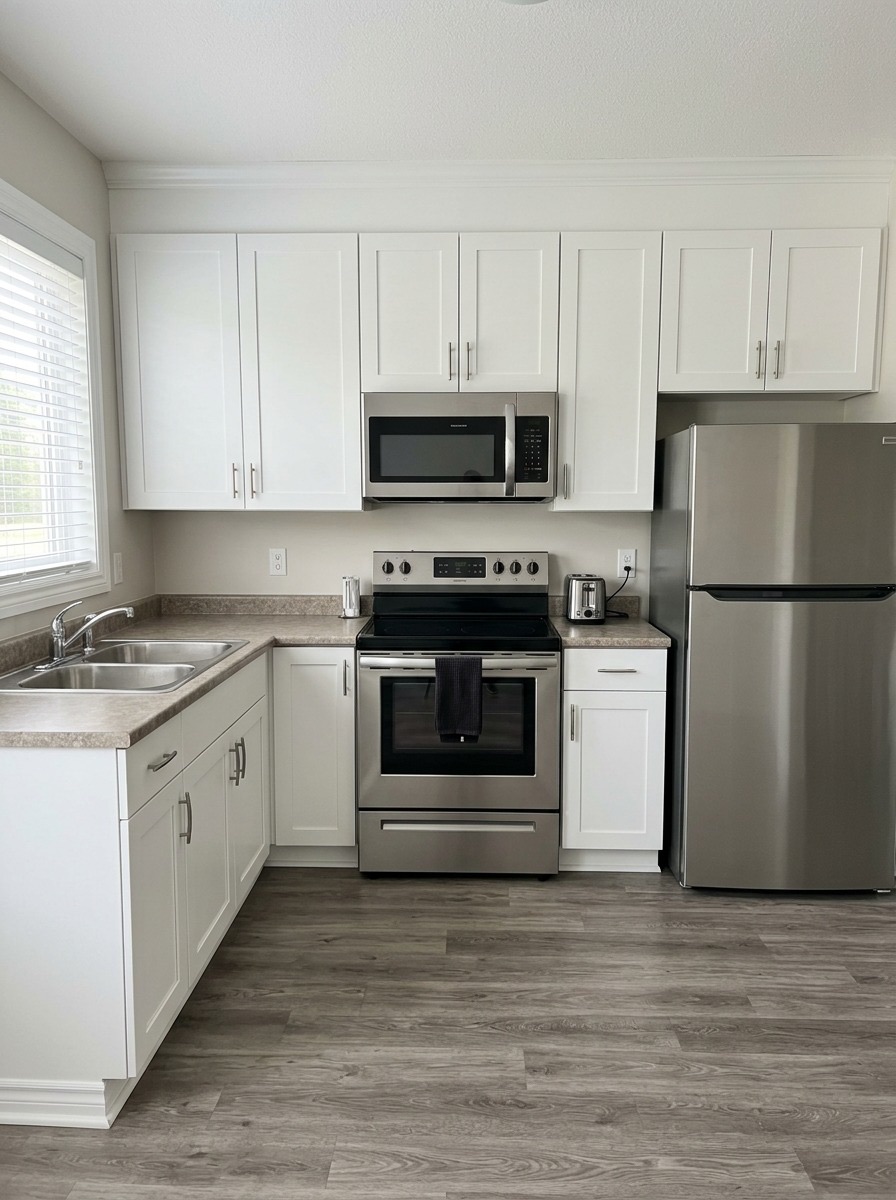
A microwave over the range, blinds on a window, vinyl plank on the floor. Each becomes a line in the study, with the photo it was seen in.
A photo doesn't show how a floor is fastened or whether a unit is hard-wired. Where that decides the class, you get a question, not a guess.
Nothing is added on its own. You tick the components that belong in your study, and you can paste a list of your own.
Step 3 · Match
The class of a component isn't our opinion. It comes from a table the IRS publishes for its own examiners.
The IRS's Cost Segregation Audit Techniques Guide lists building components by kind of property and gives each one a class. We read 480 of those rows into a catalogue.
Kitchen appliances in a rental: 5-year property, Publication 5653, page 311. Your preparer can open the page and check.
If the fact that decides the class is missing, the component stays with the building, and the study says what it would need.
Publication 5653 · Page 311
Residential rental

Cost Segregation Audit Technique Guide
Step 4 · Cost
A class without a cost is worth nothing on a return. Every component gets a figure, and the study says where the figure came from.
An invoice or a contractor's price is the cost. A record always beats an estimate.
With no record, you get a proposed cost with a low, a high and the reasoning. It stays labelled as an estimate all the way into the study.
With a figure for the whole building's cost new, the estimates are reconciled to your purchase price. Anything without support is flagged for your preparer.

Step 5 · The study
Not a summary. A document they can check line by line, in the three forms they actually use.
Every component with its class, its cost and the IRS row it was matched to.
The depreciation the study gives, beside what the same building gives without one.
The facts and tax conditions your preparer has to sign off, written out so nothing is assumed.
Download the report, export the schedule as a CSV, or send a read-only link you can revoke.
The figures are from our example study: a $475,000 rental home in Austin, TX, in service from January 2026. See the whole example, section by section.
The address, what you paid and when the building went into service. You see a first range in a minute.
You · about a minuteYour closing statement and your photos, plus plans or invoices if they exist.
You · a few minutesConfirm the values it read, answer what it couldn't see, and tick the components that belong.
You · a few minutesThe report, the asset schedule and the year-by-year figures, with a source on every line.
NoCostSeg · same dayThey check it, decide what to claim and file. For a building already in service, they take the catch-up with Form 3115.
Your tax preparerThe study is free because review is optional. When you want a CPA to check it, sign it or file it, pick a partner. That is how we earn, and you see the fee before you choose.
Start a study to see partnersOne rental or a portfolio, this year's purchase or one from years ago: the method is the same, and so is the price of the study.
A full study from a closing statement and a phone walkthrough, where a traditional study rarely pencils out.
Read against the IRS's own table for your kind of property, with the page behind every row.
In service since an earlier year? The study works out the catch-up, which your preparer takes with Form 3115.
A report to check line by line: every class with its rule, every figure with the document it came from.
Our guarantee
With NoCostSeg, about ten minutes of your time to answer the questions and upload your files, and the study is ready the same day. A traditional engineering study usually takes two to six weeks, going by the providers' own pages in November 2026.
Your closing or settlement statement is the one you need. Photos or a phone walkthrough let the study find the components. Plans, renovation invoices and an appraisal make it more precise, and none of them is required.
No. Nobody comes to the building. The study works from your documents, photos and plans, and the report says so. If your tax preparer wants a professional review, a partner CPA can do one.
Each component is matched to a row of the IRS's Cost Segregation Audit Techniques Guide (Publication 5653) for your kind of property. The class is that row's, and the page is cited beside it. If the fact that decides the class is missing, the component stays with the building.
From your own records when you have them: an invoice or a contractor's price. Where you have none, the study proposes an estimate with a range and its reasoning, labelled as an estimate, and reconciles the estimates to what you paid.
No. The study works out the depreciation that was available since the building went into service, and your tax preparer takes the catch-up with Form 3115.
Free for every property
No card, no sales call